Day-to-Day

Defending Chastity (and the Feminine Genius)

I recently read an article vilifying the virtue of pre-marital virginity. The writer claimed that girls—and the families of those girls—who make a promise not to have sex before marriage are afraid of female sexuality, devalue girls and women who aren’t virgins, and perpetuate patriarchy.

I disagree on all counts. And so does the Church.

Catholic teachings on pre-marital sex are both misunderstood as patriarchal and misconstrued as outdated. To begin with, the Church’s teachings on sexuality apply to both men and women. In the eyes of the Faith, men are not held to any different standards, nor is their worth greater than that of their female counterparts. Any suggestion to the contrary comes from a skewed cultural perspective—not from the catechism. No one can dispute that pop culture glorifies men for sexual experience and mocks women for it, but that doesn’t make it right, and it certainly doesn’t make it the position of the Catholic faith.

In truth, the Catholic Church holds the feminine genius in incredibly high esteem. During his papacy, Saint John Paul II was outspoken and passionate about the unique character and contributions of women in the Church, and in society at large. I’d encourage you to read his writings in his Letter to Women and Mulieris Dignitatem, which discuss the feminine genius—and the many and splendid roles of women in the Church—at length.

Moreover, the Church is, herself, personified as the bride of Christ. She is an essential partner in the salvation of humanity, and is both devoted to Christ and loved by him. If you truly reflect on that imagery—which was established centuries ago, at the foundation of the Church’s beginning—and it still doesn’t convince you of Catholicism’s love for femininity, I don’t know what will.

While it may seem easy to quote historically significant theologians who touted anti-feminist teachings, it’s essential to remember one thing: no person since Christ and Mary themselves has been without sin, and no one but God is always right. Because many of even our greatest theological minds may been tainted by perspectives built by the societal hierarchies of their times, it’s critical to remember that the words and teachings of no Catholic—whether saint, sinner, pastor, or nun—are taken without question. We all must recognize that, humanly speaking, wisdom is selective, conditional, and not without influence.

One of the many beautiful things about Catholicism is that the Church, as the bride of Christ, is perfect—even if her members are not. Such is the structure that has kept her faithful for 2,000 years.

In addition to her teachings against patriarchy, the Church’s teachings say nothing to reject the worthiness of women—or men—who’ve lost their virginity before marriage. Is any one of us made less valuable by sin? Less loved by God? Less capable of being forgiven? Of course not. After all, our Church knows of only two individuals who spent their entire lives without bending to the temptation of sin: Christ himself, and Mary, his mother. No person, obviously, could ever match the perfection of God. But we haven’t even managed to emulate the devotion of Mary—a fellow human, through and through.

Without exception, “Human persons are willed by God; they are imprinted with God’s image. Their dignity does not come from the work they do, but from the persons they are” (Centesimus annus, #11).

Finally, the Church isn’t fearful of female sexuality—or sexuality in general, for that matter. A thorough, end-to-end education on Catholic teachings regarding sex can be found in the Church’s theology of the body, as well as the catechism. Neither resource refers to human sexuality alone as wrong, evil, frightening, or disgusting—or, in fact, any negative quality at all. In truth, the Church regards sexuality as one of God’s most precious gifts to mankind: it is a surreal, unique opportunity to express and strengthen the bond between a married couple. More importantly, it blesses us with the opportunity to take part in God’s greatest act: creation. There’s nothing dirty or unbecoming about an honest, truly committed, selfless, and open-to-life expression of sexuality by a man or a woman.

So what, then, does the Church say is wrong about pre-marital sex?

To understand that, it is essential to understand Catholic teachings on marriage. Please check out this post for a holistic discussion on that, but here’s an abridged version:

  • Catholic marriage is a sacrament—which counts it among the seven holiest experiences anyone in the Church could ever experience.
  • Among other reasons, marriage is treated as a sacrament because:
    • It was ordained by God Himself, who joined Adam and Eve together at the very beginning of everything humanity has ever known.
    • It is the relationship in which we take on an extremely blessed and sacred role in God’s creation: that of participants in the creation of new life, which is the formation of everything out of nothing.
  • The marital bond is permanent and unyielding. As a relationship of choice—the only permanent relationship we choose to experience with a specific person, as opposed to being born into a family of blood relatives—it requires the most profound commitment there is, and therefore cannot be revoked or undone. Thus, husband and wife “become one flesh,” and cannot be separated.
  • Because that permanent, unique union joined by God cannot be fully comprehended by our limited human understanding, the Church teaches that sex is a tangible, experiential way for us to begin to grasp its profundity, in that it is inherently bonding and there is no other experience like it.
  • The relationship between husband and wife is central to the family, and thus plays an essential and unmatched role in the Church.

So chastity outside of marriage is taught by the Church neither as the selfish command of an overprotective parent, nor the devaluation of sexually active single people, nor the rejection of female empowerment. It is a holistic approach to valuing oneself for all that we are worth, because a true spirit of chastity is about more than just withholding from sex. It is taught to be a simple, selfless decision to choose love over pleasure, permanence over brevity, giving over receiving, and life over egoism.

Purity

Marriage can—and should—be comfortable, not boring.

From where I’m standing, there’s one big difference about love in marriage, as opposed to love in dating. I bet you can guess what it is.

It’s comfortable. In every good way there is.

Remember the last time you had a big, draining day, and it was rainy and dreary outside, and your work was piling up so much you felt like you might just fall over and be buried in it and no one would notice, and all you could bring yourself to make for dinner was a glass of wine and PB&J? Remember how it felt when, at the end of that day, you were so tired you couldn’t keep your eyes open long enough to watch a movie or read a book, so you just got into bed, curled up under the covers, rested your head on the pillow, and let out one long, luxurious sigh of relief—knowing you had hours of blissful dreaminess ahead of you?

That sigh. That’s what love in marriage feels like.

It’s like this big letting go of the tension and stress of your individual responsibilities, when you can settle into your special brand of relaxation, let it hug you and know you, and be welcomed into a deep, recharging feeling that only this matters.

(Sounds whimsical, doesn’t it? Silly maybe. But so is love, really. And anyway, it’s tough to explain, so I hope I’ve managed to get it across.)

But for me—and for a lot of us, I think—there’s a funny thing about that sigh: almost every day, I forget how wonderful it is until I’m actually experiencing it.

Most big, exhausting days, instead of looking forward to my head hitting the pillow, I think, Man, I can’t wait to go home and have a glass of wine. Or maybe Ugh, a Pretty Little Liars marathon would really hit the spot right now.

And sure, the wine and the entertainment are great, and they do help me relax. But then I check the time and it’s 11:15 and, because I’m basically an old woman, I think Oh no, only 5-ish hours of sleep left! and I rush upstairs to get ready for bed. By then, I’m so disappointed about how little sleep I’ll get, I can’t even enjoy that sigh, and I wake up the next day feeling just as zonked as I felt after work the day before. It’s basically the worst.

That forgetting, to me, is the risk of comfortable love. I think the folks who say marriage is boring or dull or lacks excitement have succumbed to that risk. Because love in marriage is comfortable, it seems like it should be a guarantee—but it isn’t. Just like any other relationship, it takes work. And when a husband and wife stop working on it—stop trying to luxuriate in it, stop setting the time aside for it, stop sacrificing for it, stop trying to make it the best it can be for each other—that’s when it’s in danger.

When we let ourselves get into the habit of putting our jobs, our own hobbies, or our individual interests first, it’s inevitable that we lose what time we need to devote to our marriage. To be sure, those pursuits are worth having, and it’s healthy for everyone—married or not—to have their own passions.

But once a habit of poor prioritization gets started, it’s easy to focus all of our energy on fulfilling those individual needs. Eventually you feel like all of your mental and emotional rewards come from a promotion at work, or a big paycheck, or a record number of Likes on your latest Facebook status. Because they feel so rewarding, you keep investing in them. And, because you’re not investing in it, your marriage feels less rewarding. So the cycle goes, until your relationship is in serious trouble.

Isn’t it funny how the word comfortable has such a different context in your personal life than it does in your love life? How many times have you heard the protagonist in a romantic comedy say, “But it’s comfortable…” and you shouted “Stay away! Move on! Find something more exciting!” right back?

Of course, we shouldn’t be encouraging ourselves to settle for a not-so-great relationship because it’s comfortable. But we also shouldn’t be discouraging ourselves from getting comfortable enough to settle down—with the right person and the right preparation, of course.

I guess what I’m saying is, in the context of marriage, comfortable does not—and should not—equate to easy or dull. The comfort comes from knowing, without any shadow of a doubt, that this is the person you’ll spend your life with, that they love you, and that they’d do anything for you. It comes from knowing that the person you know best also knows you best, and that they’ll always have your back. The fallacy is in forgetting that you have to be that person for them, too. And that’s not easy.

It takes sacrifice to make your marriage a happy one. But it’s well worth it when your blood pressure is up and your stress levels are through the roof, and a big crisis comes down to the moment when you can come home to your spouse, drop your burdens, and think, This is everything I need.

1395437_10202028677139064_1993620377_n

Battling Shame to Promote a Culture of Love and Life

I have never labeled myself as a feminist. I’m well aware that most feminists out there feel the same way I do: that men and women should be treated equally, paid equally, and given the same opportunities. But many of the connotations that go with modern use of the term “feminism” don’t sit well with me (although I know of a growing and beautiful movement that embodies feminism in the best way).

That said, there are two prevalent issues that never fail to spark some kind of feministy flame in my belly: the culture of shame, and abortion. I believe with my whole heart that those are the injustices that are really waging the so-called “war on women.”

To see what I mean, stop and consider what’s happening to virtually every girl and woman experiencing day-to-day pop culture and media right now.

Slut shaming. Virgin shaming. Skinny shaming. Fat shaming. Pretty shaming. Ugly shaming. Online shaming. In-person shaming. Smart shaming. Stupid shaming.

And do you know who’s often perpetuating that shame?

Women.

We mock each other for eating, speaking, praying, exercising, socializing, dating, having sex, studying, and partying too much or too little. We judge one another mercilessly and aren’t afraid to share those judgments with others. We gossip. We bully. We pick fights and wage battles over boys we barely know.

That’s incredibly frustrating and heartbreaking to see, but the thing to remember is that this lack of mercy does not define us. Inside every one of us is a beautiful, powerful heart made of love, not stone. So why don’t we let it shine? Why do we lock it up?

It’s because we constantly engage in something almost as bad as shaming each other: we shame ourselves.

It’s a vicious cycle, really. We compare ourselves to airbrushed fantasies, think of ourselves as sexual objects, and consider ourselves lucky when we capture the frisky attention of a male counterpart. In our weakness, we point out the faults in our peers to make our “positive” attributes stand out. We adhere to pop culture’s definitions of beauty and femininity and know that we don’t always fit them (because we can’t), but neither do our peers (because they can’t), and so we place the attention on them to avoid letting it fall on ourselves. And they do it right back. So on and on the cycle goes.

Without question, much of that shaming comes from standards that were set by men seeking the impossibly “perfect” woman. But it is neither empowering nor honest to say that they are solely responsible for that; we set the same—sometimes worse—standards of “perfection” and continue to demean ourselves into thinking they’re reality.

In the same way, even if we look in a mirror and make the sincere decision to love our bodies’ appearance, popping a pill so we can enjoy a man’s body—and be enjoyed by it—is not empowering, either. It’s debasing and objectifying. It’s telling us that, by taking a magic pill to suppress the bodies we claim to love, we can use our sexuality to physically enjoy ourselves “trouble-free,” and be the experience that man wants for his Saturday night.

Taking that a few steps further, it’s not empowering to be able to abort a pregnancy created by that Saturday night—it’s the opposite. As mothers, we bear the burden of telling that man about an unwanted pregnancy. That sharing role should be a blessing, not a curse; we should be able to joyfully tell the men we’ll always love, and who’ll always love us, that our children are on the way. But an unplanned pregnancy out of wedlock robs us of that; instead, we must face a near-stranger with life-changing news or, worse, must face a man we thought we loved as he reacts with disdain. We are blamed for not taking a pill on time or reminding him to use a condom. And we are told, “Go to a clinic and get this taken care of.” That is an unjust shame.

Even if that man offers to be “supportive,” we must take the pills that make us cramp and bleed for hours, or lie down and open up for a doctor who will violate our most private space with steel instruments and tubes that literally cut and suck the life out of us.

There is nothing empowering about abortion. For some women, it is forced upon them by a “partner” who refuses to support a pregnancy. Others feel forced by economic circumstances, uncaring families, or their own doctors. Regardless of the reason, women often feel isolated and panicked—neither of which will help them make a decision they’re truly, lastingly comfortable with.

Sometimes it’s selfishness, yes—and that’s a reason for another blog post. But more often than we’d like to think, women get abortions because they feel they have no choice at all.

If you’re concerned about equality in the workplace but don’t see inequality in a woman saying “I can’t stay pregnant because of my career,” you’re missing something important. To be sure, being a parent will infringe on the amount of time you can commit to your career. But pregnancy doesn’t require parenthood—adoption is always a compassionate and merciful option—so that’s not really the argument here. The point is that, if employers aren’t offering sufficient prenatal care and accommodations to their female employees, we have a problem.

And speaking of adoption, there’s some kind of stigma around that, too, isn’t there? Adoption is an honorable, selfless thing. Abortion is violent and degrading. Though certainly not as severe a stigma as it once was, no woman should be embarrassed to say she’s given up a baby for adoption. Is it painful? Of course. But she accepted the consequences of her actions, took care of her baby while she could, and chose to give him or her the best life possible—not to mention giving two people desperate to be parents a family of their own. It’s hard to find a greater gift than that, and there should be no shame in such generosity of heart. How anyone could ever argue that a child will be worse off with a happy, loving family than they would be never being born at all is beyond me.

As women, we have so many unique gifts to give and share with the people we love. Instead of focusing on how we can or should look or what we should and shouldn’t do, we are capable of using those gifts to make this world a better place. Shame, violence, and stigma aren’t going to help us do that.

Love must come first. Not shame, pain, convenience, or ignorance. Only love.

Stay humble, be merciful, and keep family first.

The other day my husband told me that we’re “at that stage in our lives where every decision we make is the biggest decision we’ve ever made.” In our early/mid-twenties, newly married, with a home, changing families and friends, and fresh careers, he’s definitely right.

At the moment, we’re in a pretty stable place. But that could change quickly because, as young adults, we just never know what might come up. He’s waiting for the next step in his career to become available, and I’m settling into new and changing opportunities in my job. We’re trying to maintain friendships that are evolving as our lives are diverted, maintain close family ties while our traditions must change, prepare for the fact that our own little bundles are probably on the not-too-distant horizon, and doing what we can to start our married life the right way.

It still takes just a little perspective to make prioritize everything as they deserve to be.

My grandfather-in-law suffered from dementia and Alzheimer’s for almost a decade. His wife met his every need unfailingly. When he lost the ability to hold a conversation, she never stopped telling him how much she loved him. When he lost the ability to speak at all, she spoke for him. When he couldn’t care for himself anymore, she barely blinked. She became not just his wife, but his nurse, his caregiver, and his lifeline. And she didn’t once complain.

Recently, his health took a serious turn for the worse. Bedridden, unable to eat, drink, or move, he was surrounded by his family within days. All three of their children—from opposite corners of the country—rushed to his side. My grandmother-in-law held his hand and kept him comfortable and told him stories.

He’d been suffering a long time. We all knew he was ready to go Home. And though the last five years, at least, had been far more work than she’d ever expected in her marriage, his wife still wept to see him on his way out. She still ached to keep him with her longer—to stay at his bedside.

As she told him stories, she laughed about the hard times they’d had as a young couple. She joked about the time she fled to her mother’s after an argument, convinced she couldn’t forgive him. The rest of us thought that sounded pretty serious, but she couldn’t even remember what the fight had been about. She giggled over the antics that had once driven her crazy. And in the quiet moments, when the somber mood overtook her, she explained how she could barely remember the bad times.

“They just don’t matter,” she said. “All I know now is how good it was.”

Half asleep and painfully exhausted, she alternated between staying by his side and fluttering around the house caring for her children and grandchildren. She rarely stopped smiling. And though you could see the hurt in her teary eyes, she told him it was okay to sleep. To rest. To go to Him. He did and, though she misses him dearly, she’s doing her very best to cope and know that he’s in a better place, waiting for her.

That’s what marriage is about: sharing the burden of strength in life’s darkest moments. Knowing your place as a servant to your spouse—no more and no less.

So, in the long run, career adjustments don’t mean much, do they? Neither do day-to-day arguments, annoying routines, or undone chores. We shouldn’t make them bigger than they are. We can only make the choices that are best for our family. There are bigger things in this life and the next. Stay humble, be merciful, and keep your family first. That’s all any of us can do.

DSCN2113

Altering My Body Isn’t Essential for My Health, and Here’s Why

Essential: absolutely necessary or extremely important.

When you hear the phrase “essential for your health,” what comes to mind? Water? Exercise? Decent nutrition? Regular check-ups?

What about “Essential for men’s health?” Probably most of the same things, with some adjusted cancer screenings and precautions tailored to their risks. The same would go for women’s health, right?

“The health care law puts women and families in control of their health care by covering vital preventive care, like cancer screenings and birth control. … We believe this requirement is lawful and essential to women’s health.”

That’s a statement from the White House regarding the contraceptive requirement of the Affordable Care Act (emphases are mine).

Let’s step back and explore it for a minute.

As I mentioned in a previous post, hormonal birth control works by suppressing the female body’s natural cycles. It works to prevent ovulation, alter cervical mucus and the lining of the uterus, and change the way the cilia in a woman’s fallopian tubes move. It changes the way her body works by adding artificial hormones.

I’m not a doctor, but I can’t think of a single reason anyone in perfect health would find added hormones essential to their health. Is ovulation an illness? Is your reproductive cycle, which occurs on its own, naturally, without intervention, something to be cured, reversed, or stifled for the sake of “wellness”?

Does interfering with a natural bodily function equate to regular cancer screenings when it comes to monitoring my health?

There’s a growing movement to shed light on the use of artificial hormones on livestock raised for food production because a growing number of studies may indicate increased risk of health problems resulting from those hormones. But in the same moment a young woman might opt for organic beef, she’ll pop her birth control pill with a glass of hormone-free milk. What sense does that make? To me, it doesn’t make any sense at all. But she’s been taught to think it’s not just safe, but essential for her health.

Preventive care: measures taken to prevent disease or injury, rather than cure them or address their symptoms.

Hormonal birth control doesn’t cure disease—it disrupts a natural cycle and, in fact, can mask underlying problems. Though the medical community hasn’t come to a consensus on all of the below side effects, some studies show it also puts women at increased risk for a host of medical problems, including:

  • Heart disease
  • Blood clots
  • Certain types of cancer (including breast cancer)
  • Ectopic pregnancy (the number one cause of maternal death)
  • Uterine perforation (with an IUD)
  • Infertility
  • Aches and pains
  • Painful intercourse
  • Hypothyroidism
  • Decreased sex drive
  • Diabetes (among women with increased risk)
  • Stroke
  • Cervical cancer (among women with HPV—which is, sadly, about one-third of women in their twenties)
  • Weight gain
  • Emotional problems (including depression) 

(Much of this information I learned in several places, but these two are particularly helpful: this blog post includes extensive citations and references, as well as further details; and this website, while geared toward a specific message, is also very thorough and insightful. Check them out to learn more.)

And, even if some of those risks are small and/or inconsistently displayed among women, is it worth potentially compromising our health at all when natural, risk-free alternatives exist? People make the same arguments against eating organic, unmodified foods — but a lot of us choose to err on the side of caution there, don’t we?

Additionally, artificial hormones suppress a woman’s natural hormone production and, therefore, overrule her natural cycle. That means any undiagnosed medical problems—such as endometriosis or anovulation—can go unnoticed and unaddressed until they’ve had a serious effect. She may not even realize these problems exist until she’s actively trying to get pregnant and can’t, or discontinues the birth control and finally notices symptoms.

Often, women take hormonal birth control to “restore hormonal balance” and treat unpleasant physical symptoms, like irregular cycles, PMS, or even acne. But taking birth control only masks the symptoms—it doesn’t get to the heart of them. Especially in girls and young women, cycles tend to be inconsistent for a while as the body matures and adjusts to adulthood. It’s a fact of life, and altering it artificially doesn’t change that. When she comes off the pill (or other method)—often years later—her body may still have a tough time normalizing itself after years of inhibited functioning.

There are natural ways to balance hormones. Something as simple as a diet change, vitamin supplements, and exercise can make a big difference. Of course, all of this should be discussed with a doctor. But the point is that there are other options, whether we hear about them in everyday conversation or not — so you don’t need to take hormonal birth control. There are also non-hormonal ways to treat things like acne and cramps.

So how are suppressing a natural function, potentially masking health issues, and increasing risk for other health problems essential for my health? How is that preventive care?

Women should be well-informed about how to meet their unique health needs safely and effectively, instead of being immediately given a script for birth control pills just because it’s the common or easy thing to do. What do we have to gain, as women, by denying our natural state and altering the way our bodies are made to function? I’ve asked it before, and I’ll ask it again: what message does that way of thinking send to our sisters, our daughters, and ourselves?

No Flaw

Does NFP Work? (Or, How Am I Not Pregnant?)

In my first post about natural family planning (NFP), I mentioned that almost everyone asks “Does it really work?” when I tell people that my husband and I practice it. Given that it’s been almost a year and a half since the wedding and I’m definitely not pregnant, it seems like a funny question. It sort of answers itself, doesn’t it? But regardless, it’s a valid question, so I’d like to address it.

To level-set, I’m no expert on this. I’m a user of the method and I’m an advocate for it, but I haven’t been trained to teach it to others and I can’t speak beyond the statistics and my own experience. I will say that, for our first year, we worked closely with a professional, certified practitioner to learn the method thoroughly and ensure we were doing it right.

I’d also like to point out that this post briefly mentions some signs of female fertility, so if you’re not interested in reading about that, you might want to stop now. Just a friendly heads up.

However, if you’re interested in learning more or trying NFP for yourself, I’d be more than happy to give you our teacher’s contact information. You can also check out this website to find a list of practitioners in your area, if you’re not around Chicago.

Alright, now, let’s get to the meaty stuff.

There are a number of methods that fall under the NFP umbrella. All of them track a woman’s hormonal cues to identify fertile and infertile days. Those cues include basal body temperature, cervical mucus, cervical position, and other physical readings.

Erik and I use the Creighton model. We chose it for a few reasons:

  • It doesn’t call for a basal body temperature (BBT) reading. BBT must be taken every day if it’s used to track fertility. It’s usually taken in the morning and requires a very consistent sleeping schedule, which I don’t have—so a BBT-dependent method wasn’t really going to work for us.
  • I’d been minimally exposed to it before. A friend in college experienced some feminine health issues, and her doctor helped her use this method to help track her physical cues, identify problems, and improve her treatment. Sounded like a great thing to me.
  • It’s incredibly easy. You just need to track one cue throughout the day, each time you go to the bathroom. Once you get the hang of it, it adds maybe five minutes—in total—from morning to night. No trouble at all.
  • It encourages involvement of both husband and wife, so both can understand their fertility and grow closer as a couple. It also encourages positive interactions—spiritual, physical, intellectual, communicative, and emotional—at every stage. It’s a great resource for working to keep your bond strong in unique ways every single day.
  •  It works. It’s been thoroughly studied and tracked, and it’s proven effective.

One of the great things about NFP is that it’s incredibly inexpensive. After your first year—when training is a good idea, since any kind of family planning only works if you do it right (including hormonal birth control)—all you require is the supplies. In our case, those consist of a paper chart and some stickers. Super easy.

NFP tracks your fertility by helping you understand what cues to look for. Your body knows when it’ll be ready to conceive during each cycle and prepares itself accordingly. For most women, the changes are noticeable and very easy to monitor.

When used perfectly (not a difficult feat, as I mentioned above), studies have shown that NFP is as effective as hormonal birth control, making it even more effective than physical contraceptives. But you don’t need to add artificial hormones to your body, you don’t need to suppress your natural cycles, and you don’t need a barrier between you and your husband.

NFP is not the rhythm method. Just as every other human science has advanced in the last few decades, natural family planning has, too. This isn’t about guessing when you’ll ovulate by counting days and averaging cycles among all women. It’s about following your individual fertility and wellness—as unique to you as your thumbprint. That’s why it’s so effective.

In addition to its efficacy at delaying pregnancy, NFP can also be used to help you conceive. Those same hormonal cues tell you when you’re at your peak during each cycle—so, when you and your husband are ready, you know the best time to try. That’s key to successful conception, because your egg can only be fertilized during a narrow 12-24 hour window of each cycle. That’s it. Knowing where that window is can help greatly increase your chances of conceiving early on.

So, does it work? The answer is yes. It works incredibly well for your family, your fertility, and your health. And it’s worth a try.

Creighton Photo

Individual Roles, Mutual Subjection, and Equal Respect in Marriage

My husband and I are two exceptionally different people. I love chocolate; he likes vanilla. I could spend entire days reading; he gets bored after a few pages. He enjoys hunting (for food, not sport); I can barely carve raw meat without cringing. He finds peace in woodworking; I relax while I write.

Every relationship is like this in one way or another. Each of us is a one-of-a-kind blend of nature, nurture, opinions, and habits. For that reason, no two people are the same—and wedding rings don’t turn husband and wife into a single-minded, tunnel-visioned creature. Two become one, but that happens because they complete, support, and accept each other without question.

Given our differences, practically speaking, one component of a healthy marriage is settling into a mutually satisfying set of responsibilities, checks, and balances. In our case, that means Erik pays bills while I go grocery shopping; he shovels the driveway while I do the laundry; he cleans out clogged drains while I toss the expired stuff out of the fridge. We have a pretty traditional approach to household tasks, but not every marriage does. Some men love cooking, like cleaning, and know nothing about home repair. Some women love yardwork, enjoy changing their oil, and have no clue how to patch a pair of jeans. There’s nothing wrong with that. Any combination of shared tasks will do.

The point is finding a balance in which both husband and wife contribute to home and happiness. No one likes chores. But when spouses compromise based on what’s more agreeable for each, they can define their roles easily. Of course, we all trade tasks here and there, when the mood strikes. Again, the point is a shared balance—not formality or normality. You fulfill your responsibilities not because you like it, but because it must be done and you love your spouse enough to share the load. This applies to small stuff like cleaning and setting up dentist appointments, and to larger things like career paths and home defense. That’s family. That’s the partnership that a strong marriage requires.

So, given that well-rounded approach to sharing individual but mutually necessary marital responsibilities, what does the following passage tell us about the roles of husbands and wives?

Wives, submit yourselves to your own husbands as you do to the Lord. For the husband is the head of the wife as Christ is the head of the church, his body, of which he is the Savior. Now as the church submits to Christ, so also wives should submit to their husbands in everything. Ephesians 5:22-24

Let me begin by saying it does not tell us to be slaves. We are not the unthinking, helpless creatures that pop culture has misinterpreted and twisted this verse into implying. We are capable, beautiful women—wives, mothers, sisters, daughters—and we are strong, so don’t get that wrong.

I recently read a wonderful article that sums up what this passage means. You can read it here. I believe it’s clearly and beautifully voiced the truth behind these verses, so I’d like to share it with you. The following analysis largely mirrors and learns from that article.

Ephesians 5 tells us to accept our husband’s role in our marriage. The Greek word for ‘head’ in this reading is kephale. It doesn’t, literally or figuratively, mean ‘boss’ or ‘king.’ It literally means that thing that sits on your shoulders. Figuratively, the Greek word kephale means ‘source or beginning or completion,’ or ‘one who brings fullness.’ From that perspective, if a wife cannot accept her husband as the one who completes her or brings fullness to her life, she isn’t looking at marriage the right way.

The family unit is where the Church begins, so each family is called to be a mirror of the perfect love exemplified by Christ and the Church, his bridegroom. Husbands fill the role of “head” for a number of reasons. His job is to be a deliberate, logical, and emotive leader. He is a provider and a caregiver, and he takes responsibility for his family’s health, happiness, and safety.

You might still argue that that’s an outdated, hyper-traditionalist way to look at the role of the husband. But being a provider doesn’t mean his sole task is to bring home a paycheck while his wife keeps house. It means doing what he can to make his wife and his children comfortable and happy, and accepting his responsibility for their success. That role can take many forms, and Ephesians calls all wives to be humble and loving enough to accept that role for their husbands.

The rest of this letter’s passage on marriage adds more color to the role of the husband:

Husbands, love your wives, just as Christ loved the church and gave himself up for her. in order to make her holy by cleansing her with the water of the word, so as to present the church to himself in splendor, without a spot or wrinkle or anything of the kind—yes, so that she may be holy and without blemish. In the same way, husbands should love their wives as they do their own bodies. He who loves his own body loves himself. For no one ever hates his own body, but he nourishes it tenderly and cares for it, just as Christ does for the church, because we are members of his body. ‘For this reason a man will leave his father and mother and be joined to his wife, and the two will become one flesh.’ Ephesians 5:25-31

The added emphases are mine; they’re meant to call out the depth of humility husbands are called to offer for their wives. The love Paul asks from them here is not erotic or domineering—it is profound, selfless, and sweet. Nowhere in this passage does Paul tell husbands to dominate their wives, give orders, or put themselves first. Instead, Paul is calling for men to offer themselves as servants to their wives: love her, cleanse her, make her holy. Put her first so that she may be without blemish; nourish and care for her tenderly so that you may live your fullest life.

Given the practices of Paul’s time, this message is a radically humbling one for men in the Church. He calls each husband not to be a property owner or a monarch, but a loving, kind, and humble husband whose life’s work is to meet the needs of and support his wife. I don’t see anything misogynistic in that.

Women are blessed with the sublime and completely unique gift of femininity. Naturally, her heart is uniquely open to nurturing love, and that’s true even if she struggles with fertility. In that way, a woman’s role is biologically and spiritually unique to her: she is ordained to be a sister to her family, a wife to her husband, a daughter of God, and a mother to all children. There is no greater blessing than the outpouring and influx of love in a mother’s heart.

Husbands, though biologically separate from the birth of children, are ordained as fathers, sons, brothers, and husbands. Their role, though different, is no less and no more important.

To call men and women the same is an insult to both their geniuses. They look, love, serve, and behave differently. They were created differently, so that each might have their own characteristics, strengths, and weaknesses. They were made to balance one another, to complement each other’s unique needs, and to serve one another.

So masculine and feminine roles in marriage aren’t defined by 1950s standards of social acceptability. It’s not about who cooks, who works, who cleans, and who decides. It is about the two of them becoming one cohesive, loving body—one union to live and share life as beautifully and fully as they can. The day-to-day breakdown of responsibilities isn’t what’s important; the love, selflessness, and balance of their relationship are. And where those priorities are in place, mutual respect will inherently dwell.

Marriage is not 50/50 or 70/30—it is 100/100. It is an equal partnership in which both spouses give everything they’ve got. What they each have is unique to them—that’s why it works. And that’s why we love one another.


Why I Don’t Use Hormonal Birth Control

When I tell people I don’t believe in using artificial birth control, they often think I’m one of three things: a hippie, a nut, or an overly religious, old-fashioned conservative.

I can tell you I’m a religious, old-fashioned, and fairly conservative young woman. But I’m not crazy and I’m not into conspiracy theories.

My husband and I chose to save sex for our wedding night, largely because it’s what we believed was morally, physically, and spiritually right. But we were also scared. Scared of getting caught, scared of getting pregnant, scared of regretting it later. No matter the reason, it was the best decision we could’ve made.

For that reason, I didn’t need to think about birth control until a few years ago. I had irregular cycles and acne as a teenager, but I never wanted to ask for birth control pills to address those things. I didn’t want to give my family the wrong idea, and I didn’t, frankly, want to tempt myself.

As Erik and I matured and began planning our marriage, we did a little more digging into church teachings about family planning. We knew the church taught against artificial birth control, but we didn’t know why. Was it just outdated, like everyone said? Was there an alternative that wasn’t just plain risky? Were we prepared to have a busload of kids?

So we looked into it. When we read that the pill—which seemed like the easiest option—could serve as an abortifacient form of birth control, we decided to do even more research.

So I want to talk about the pill. I don’t think women know enough about it, simply because we’re never taught enough about the way it works. So I hope this is helpful.

In sex ed, everyone tells you the pill works by tricking your body into thinking it’s already pregnant. In fact, people still tell me that if I ask them how it works today. The thing is, it’s not really that simple. It adds hormones to your body in a similar way that a pregnancy would, sure. But that’s not all it does.

Hormonal birth control—i.e., the pill, as well as most patches, IUDs, injections, and other chemical forms—works in four ways:

  • Suppressing ovulation to prevent your ovaries from releasing an egg during each cycle
  • Altering your cervical mucus so it’s more difficult for sperm to navigate
  • Disrupting the way the cilia in your fallopian tubes move to reduce the chances of a fertilized egg reaching the uterus for implantation
  • Inhibiting the growth of your uterine lining (the endometrium) so any fertilized egg could not attach properly
  • (In some cases, the “mini-Pill” (a progesterin-only option) may not prevent ovulation or conception (those first two tactics) at all.)

Two of those effects are designed to prevent conception. But the last two prevent implantation—meaning your body hasn’t been tricked, knows you’re not pregnant, and has ovulated as it naturally would. Your cervical mucus wasn’t thick enough to keep sperm from traveling through you. So an egg is fertilized, and pregnancy has begun.

The pill doesn’t give up, though. The third effect prevents the body from moving your fertilized egg to the uterus, where implantation would take place and the embryo would receive the nutrients necessary for development. The fourth effect changes the environment of your uterus and prevents that viable zygote from taking its place in your womb and growing. That zygote—though very tiny—has its own DNA. It is individual of the woman’s body, in that her DNA and her partner’s—two human parents—have joined to create a third entity. Science has proven that conception is the moment a new individual (and, therefore, a pregnancy) begins—not implantation. The DNA is human. Given the simple resources a pregnant mother provides (a warm, safe place, nutrition, and oxygen), that individual will grow into an infant who, in just a few months, can be held and tickled and nursed in its mother’s arms.

Occurring about a week later, implantation is simply the end of the embryo’s journey down the fallopian tubes. It settles into the uterus by attaching to the endometrium, which provides the nutrients it needs to grow and develop. That little individual—with new DNA and a separate makeup from its mother—has already existed for several days. When the lining of the uterus has been altered by the pill, the implantation factors of the lining—key chemicals, as well as special molecules known as integrins—are damaged and unable to perform their job. So imagine that zygote is a plane led by a pilot, and the uterine lining is the airport. If the crew at the airport can’t communicate with the pilot flying the plane, the plane can’t find a safe place to land. And if the plane can’t land, the pilot won’t survive long.

The “morning after pill” works this way, too. It’s just a high dose of the hormones that will delay ovulation and/or alter the endometrium, with the hope that ovulation will not occur or, if it already has, that the uterine lining will be compromised before the embryo reaches it. The plain old pill just does it a little slower.

So, anything that works to prevent conception can be called contraceptive. But anything that fails to prevent contraception can’t share the same term. Conception has already happened. At that point, your pill becomes abortifacient. That is the scientific word for anything that stops a pregnancy after conception has already occurred.

That said, even if the birth control industry came out with a pill that didn’t have an abortifacient effect, I still wouldn’t take it. Aside from the health risks (which I’ll also address in another post), I don’t think it empowers women. In fact, it literally—by which I mean physiologically—suppresses the women who take it.

What message are we sending our future daughters when we say that taking the pill—effectively turning off a natural function of our bodies, and altering the way our biology works—is the only way to gain control over our love lives, our families, and our sex lives? That’s the opposite of support. It conceals a woman’s natural, complex biology so she can become an object of pleasure. It’s repression. And I don’t buy it.

Our bodies do amazing things each month. That’s part of our feminine identity—it’s the magic only we can make happen. And it’s not just about the fact that we can carry children. Sadly, some of us can’t. In every case, understanding the way our natural cycles affect our day-to-day wellbeing gives us greater insight into our health and physical selves. It’s about knowing yourself, truly. It’s about taking ownership of the complex, profound woman you were literally made to be. It shouldn’t be about stamping out your nature because you were never taught how to handle it on your own, or that it was worth protecting. We’re capable of so much more than that. All of us.

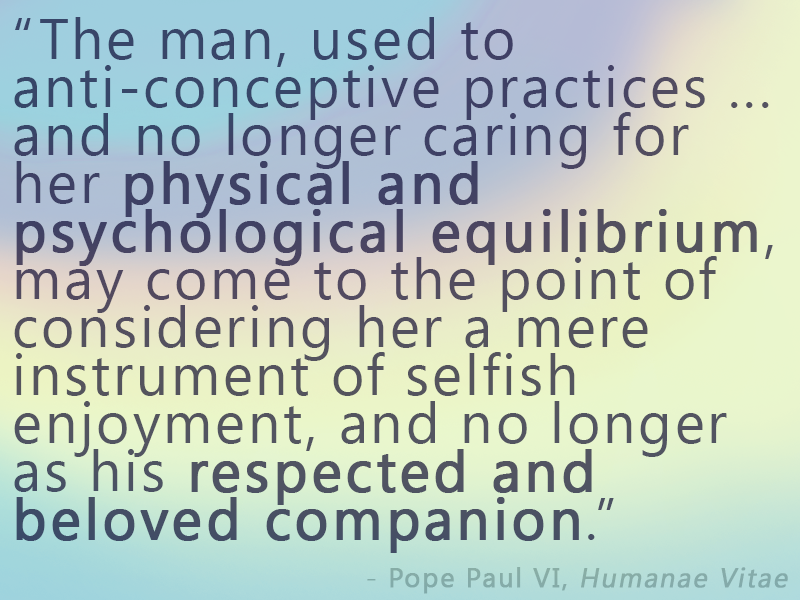
Respected and Beloved

Letting compassion come through.

I spend over two hours of every day on the train during my commute. I definitely prefer it to driving—sure, the schedule is restrictive, but at least I don’t have to deal with expressway traffic or ragoholic drivers—but it has its shortcomings.

One of those is a biggie. Train accidents aren’t common, but they’re not all that rare, either. Pedestrian accidents—sadly, often suicides—are, of course, the worst. I once sat on a train for more than three hours as crews responded to, cleaned up, and investigated a pedestrian accident. It was a heartbreaking experience. The conductor very plainly told us we’d hit someone. More than once, he used the phrase “There’s a body under the train, and they’ve got to get it out.”

He was just trying to keep passengers updated on the situation, but for me, it was way too graphic an overshare. I watched fire, police, and railroad crews moving in and out of the view from my window seat and thought, I’ve literally never been this close to death before. I cried quietly the whole time, imagining that poor man’s last moments.

I haven’t been on a train directly involved in an accident since then, but I’ve sat in backed-up trains waiting for clearance after a crossing accident several other times. This week, on a particularly snowy day with whiteout conditions and slippery streets, my train was stuck when the one ahead of us hit a car at a crossing.

When the conductor announced this delay over the intercom, everyone groaned. Many of us had caught an early train hoping to avoid weather-related delays during rush hour, and there we were, stuck anyway.

But do you know what I realized? While many people were vocal about their disappointment with the delay, not one person spoke up and said, “Wow, I hope the people in the car are okay.” Not one of us. I thought it, but I didn’t say it aloud. I should’ve. Instead, everyone was saying something like, “I hope this doesn’t take as long as it did last time” or “I don’t have time for this.”

For background, delays are longer when there’s a fatality involved. When that happens, all those fire, police, and railroad crews have to perform an investigation and document the accident. When it’s just a car that’s been struck, they can simply clear the tracks of debris, inspect them for soundness, and let the waiting trains move on.

A little while later, the conductor walked through our car and said he’d gotten word that there were no fatalities—a car had stalled on the tracks and the driver couldn’t move it in time because of the heavy snow. The driver managed to walk away without a scratch. Someone had caught the accident on video (a whole other topic, if you ask me), and it looked like the car’s front end was hit by the train—not the midsection, where the driver would’ve been vulnerable.

And do you know what I heard when he said that? “Oh, great, no deaths—we won’t be stuck here much longer.”

Not “Thank God that driver is alive” or “How great that no one was hurt” or even “I hope they had good insurance.” The passengers just voiced a general satisfaction that their schedules wouldn’t be interrupted too dramatically.

It’s amazing how easy it is for us to become desensitized to tragedies. When it’s the train in front of ours doing the hitting and you’re tired after a long day and want to get home, it’s easy to pretend that accident is happening in a different universe, and that makes it easy to pretend that your time is worth more than the life that was at risk. When it’s your train but it’s happened before and it was the victim’s choice to die, it’s easy to block the experience and cast it aside.

The thing is, we don’t even think about it sometimes. It’s not that we actively choose to believe our evening plans are worth more than that person’s whole life. It’s just that it never occurs to us to recognize that lack of thought.

The ability to avoid emotional reactions to catastrophe is a defense mechanism. It’s designed to help us continue surviving even as we face danger, or as others are hurt or killed. But that mechanism doesn’t really prevent the emotions so much as it blocks them. And the mechanism isn’t perfect, either. It’s not the end-all, be-all, and it’s not a solution to the struggles we face. Blocking emotions (or even memories) is simply the mind’s way of protecting us in the moment, much like our bodies elevate our temperature in an attempt to fight infection. Though it’s a valiant effort to address an immediate problem, it can often have longstanding effects on our minds, our emotions, and our souls.

As men and women of a single, global community, we owe it to ourselves and each other to overcome our instincts in favor of compassion and justice. So instead of letting your well-meaning brain stamp out your feelings, let your heart be free to care. Let it speak up, reach out, and make a difference. That’s what makes us human.

Barbie, Bikinis, and Body Image

The Sports Illustrated Swimsuit Edition came out this week. If you’re like me, you’re gearing up for several weeks of cringing at the same photos of basically naked, airbrushed, underweight supermodels appearing in the media repeatedly for no real reason except “sex sells.”

But this year, SI has given us a new kind of cringeworthy: Barbie, with her hair perfectly fluffed, her swimsuit perfectly cut, her feet perfectly buckled in risqué stilettos, and her impossible figure stretched across a glossy page published for 36-year-old men seeking soft porn to gawk at.

Yes. That happened. A doll marketed for 3- to 7-year-olds is all mixed up between layers of real, objectified, female skin.

Why? Oh, haven’t you heard? Barbie’s “#UNAPOLOGETIC” now. She doesn’t care what people say about her, with her impossible standards of beauty and her materialism. In the face of real criticism about her effects on body image, self esteem, and young girls’ physical and mental health, she’s decided to go the sexy route. Because that makes sense.

Because teenaged boys and middle-aged men browsing their annual not-quite-Playboy should definitely be thinking about the health and wellness of young girls while they “read” about this year’s biggest swimwear trends. And they’re definitely going to glean a new understanding of an “#unapologetic, strong, and independent” new persona for Barbie, too.

Makes sense.

There are few things that frighten me more about parenting than the task of overcoming pop culture—especially today, when every aspect of media is chock full of garbage and every man, woman, and child is berated with it 24/7.

Diaper changes, late-night feedings, and tantrums I can handle. I haven’t been there yet and I know those won’t be pleasant rituals, but all parents endure them and the best ones learn to find humor in it all. I think that, with my husband’s help and a little faith, I can do that. But the responsibility of out-screaming, so to speak, the messages our society sends our children is a truly intimidating one.

When we’re repeatedly told that casual sex and good looks offer more life experience than commitment and human connection, we’re in trouble. I want my daughters—and my sons—to know that they’re worth everything. Their value isn’t determined by their fondness for vulgar music or their propensity to break rules or their skills in any physical endeavor whatsoever. I want them to know that their goodness is in their personalities, their intelligence, their hearts, and their faith. I want them to be loyal without being called “naïve,” committed without being called “desperate,” and generous without needing to give their bodies for someone else’s concept of “fun.”

Our children should be given the chance to understand what beauty really is. They should be taught that sex is the ultimate expression of love and unity—not a means to just anyone’s (or their own) pleasurable end. Our daughters should be treated like sisters, not objects—and they shouldn’t need to starve, Photoshop, or berate themselves to meet an unrealistic, societal “requirement” of acceptance. Our sons should know that they are whole people, not hormone-driven animals, and that they can and should be appreciated for the real gifts they can give those around them.

I recently heard the phrase, “We complain about society, but we are society.” That’s the honest truth. And I hope we all think about it deeply. How can we influence those around us to make this world a better place for our children? How can we change the way we behave so that we begin and end every pursuit with love, not selfishness, lust, or ignorance?

It takes a village to raise a child. I hope I’ll surround myself with the right one. And I hope you’ll help me do it.

Praise to Blossom