Catholicism

How and why Catholics are devoted to the saints.

Catholicism is unique for a myriad of reasons, but one of my favorites is our devotion to the saints.

I know that’s sometimes a misunderstood quality of my faith, and that breaks my heart. The most common misconceptions, in addition to being inaccurate, truly miss the point at the heart of this devotion.

Saintly devotion, for Catholics, is not equivalent to the worship of the Trinity (or any of its persons). Let’s make that clear right off the bat. Catholics define three types of worship. The highest form is latria, and is reserved for God and God alone. Latria is adoration, which can only be given to God—given to anyone else, it is idolatry and, therefore, a grave sin.

The Church describes adoration in a few ways, but here are some of my favorite for this context:

  • “Adoration is the acknowledgement of God as God, creator and savior, the Lord and master of everything that exists as infinite and merciful love.” CCC 2096
  • “Adoration is homage of the spirit to the King of glory, respectful silence in the presence of the ever greater God.” CCC 2628
  • “True adoration involves a docile heart, an assent to God’s sovereignty over our lives, a constant posture of humility before Him, and gifts of love offered in homage.” CCC 2111
  • Adoration is “the highest reverence to be offered only to God, our creator, redeemer, and sanctifier, who alone should be worshiped and glorified.” Concise Dictionary of Theology

This worship can be given, inherently, only to God. It is one of the four ends of prayer (comprised also of atonement, supplication, and thanksgiving), and captures our respect, love, and subjection for the Father, Son, and Holy Spirit.

The two other forms of worship—hyperdulia and dulia—are directed toward Mary and the rest of the saints, respectively.  Both are defined by reverence, as opposed to the adoration involved in latria. Catholics are not called to pay homage to the saints, nor are we praying for them to perform any kind of miracle on their own.

Here’s the thing about saints: we ask them for their intercession, not their intervention. The saints intercede for us by praying for us to God. They are credited with miracles not because of their own power or ability, but because God responded to their devotion by sharing His gifts with and through them. In fact, many saints objected to being credited with miracles because they insisted their actions were performed by God’s hands alone.

Though it sounds complicated, sainthood comes down to a simple principle: it means we’re confident—based on their actions and devotion to a life lived for God—a person is truly in heaven. That’s why people aren’t made saints until after they die; it’s why it takes a long time for the Church to canonize anyone, since some investigation is required to make this statement confidently; and it’s why we have All Saints Day, which recognizes and shares love with the saints whose names we don’t know.

The short of it is that everyone in Heaven is a saint and, because they’re in Heaven, they’re closer to God than we can ever be whilst here on earth. Since we know they are close to God, we ask for their intercession because we know their prayers on our behalf will be heard. We all have a penchant for making mistakes and breaking promises, so we can use all the help we can get. Prayers of intercession from souls who may literally be sharing a table with God at this very moment certainly couldn’t hurt our hopes of staying on the righteous paths we are made to walk.

In their incredibly helpful roles as prayerful supporters, the saints aid our efforts to seek forgiveness, of course, but also to be stronger, to improve ourselves as people, and to be closer to God. They do this by praying for and with us, as well as by serving as examples of holy living here on earth. What I mean is that saints are brothers and sisters whom we can look up to, both literally and figuratively. There is no better role model than a person who’s won the true battle and made it to the ultimate realm of happiness, love, and spiritual “success.”

While we’re admiring the saints, we’re also invited to identify with them. They struggled and misstepped and tripped just as we do; they know our suffering. Fortunately for us, they—and their real compassion and wisdom—are always there to help.


Battling Shame to Promote a Culture of Love and Life

I have never labeled myself as a feminist. I’m well aware that most feminists out there feel the same way I do: that men and women should be treated equally, paid equally, and given the same opportunities. But many of the connotations that go with modern use of the term “feminism” don’t sit well with me (although I know of a growing and beautiful movement that embodies feminism in the best way).

That said, there are two prevalent issues that never fail to spark some kind of feministy flame in my belly: the culture of shame, and abortion. I believe with my whole heart that those are the injustices that are really waging the so-called “war on women.”

To see what I mean, stop and consider what’s happening to virtually every girl and woman experiencing day-to-day pop culture and media right now.

Slut shaming. Virgin shaming. Skinny shaming. Fat shaming. Pretty shaming. Ugly shaming. Online shaming. In-person shaming. Smart shaming. Stupid shaming.

And do you know who’s often perpetuating that shame?

Women.

We mock each other for eating, speaking, praying, exercising, socializing, dating, having sex, studying, and partying too much or too little. We judge one another mercilessly and aren’t afraid to share those judgments with others. We gossip. We bully. We pick fights and wage battles over boys we barely know.

That’s incredibly frustrating and heartbreaking to see, but the thing to remember is that this lack of mercy does not define us. Inside every one of us is a beautiful, powerful heart made of love, not stone. So why don’t we let it shine? Why do we lock it up?

It’s because we constantly engage in something almost as bad as shaming each other: we shame ourselves.

It’s a vicious cycle, really. We compare ourselves to airbrushed fantasies, think of ourselves as sexual objects, and consider ourselves lucky when we capture the frisky attention of a male counterpart. In our weakness, we point out the faults in our peers to make our “positive” attributes stand out. We adhere to pop culture’s definitions of beauty and femininity and know that we don’t always fit them (because we can’t), but neither do our peers (because they can’t), and so we place the attention on them to avoid letting it fall on ourselves. And they do it right back. So on and on the cycle goes.

Without question, much of that shaming comes from standards that were set by men seeking the impossibly “perfect” woman. But it is neither empowering nor honest to say that they are solely responsible for that; we set the same—sometimes worse—standards of “perfection” and continue to demean ourselves into thinking they’re reality.

In the same way, even if we look in a mirror and make the sincere decision to love our bodies’ appearance, popping a pill so we can enjoy a man’s body—and be enjoyed by it—is not empowering, either. It’s debasing and objectifying. It’s telling us that, by taking a magic pill to suppress the bodies we claim to love, we can use our sexuality to physically enjoy ourselves “trouble-free,” and be the experience that man wants for his Saturday night.

Taking that a few steps further, it’s not empowering to be able to abort a pregnancy created by that Saturday night—it’s the opposite. As mothers, we bear the burden of telling that man about an unwanted pregnancy. That sharing role should be a blessing, not a curse; we should be able to joyfully tell the men we’ll always love, and who’ll always love us, that our children are on the way. But an unplanned pregnancy out of wedlock robs us of that; instead, we must face a near-stranger with life-changing news or, worse, must face a man we thought we loved as he reacts with disdain. We are blamed for not taking a pill on time or reminding him to use a condom. And we are told, “Go to a clinic and get this taken care of.” That is an unjust shame.

Even if that man offers to be “supportive,” we must take the pills that make us cramp and bleed for hours, or lie down and open up for a doctor who will violate our most private space with steel instruments and tubes that literally cut and suck the life out of us.

There is nothing empowering about abortion. For some women, it is forced upon them by a “partner” who refuses to support a pregnancy. Others feel forced by economic circumstances, uncaring families, or their own doctors. Regardless of the reason, women often feel isolated and panicked—neither of which will help them make a decision they’re truly, lastingly comfortable with.

Sometimes it’s selfishness, yes—and that’s a reason for another blog post. But more often than we’d like to think, women get abortions because they feel they have no choice at all.

If you’re concerned about equality in the workplace but don’t see inequality in a woman saying “I can’t stay pregnant because of my career,” you’re missing something important. To be sure, being a parent will infringe on the amount of time you can commit to your career. But pregnancy doesn’t require parenthood—adoption is always a compassionate and merciful option—so that’s not really the argument here. The point is that, if employers aren’t offering sufficient prenatal care and accommodations to their female employees, we have a problem.

And speaking of adoption, there’s some kind of stigma around that, too, isn’t there? Adoption is an honorable, selfless thing. Abortion is violent and degrading. Though certainly not as severe a stigma as it once was, no woman should be embarrassed to say she’s given up a baby for adoption. Is it painful? Of course. But she accepted the consequences of her actions, took care of her baby while she could, and chose to give him or her the best life possible—not to mention giving two people desperate to be parents a family of their own. It’s hard to find a greater gift than that, and there should be no shame in such generosity of heart. How anyone could ever argue that a child will be worse off with a happy, loving family than they would be never being born at all is beyond me.

As women, we have so many unique gifts to give and share with the people we love. Instead of focusing on how we can or should look or what we should and shouldn’t do, we are capable of using those gifts to make this world a better place. Shame, violence, and stigma aren’t going to help us do that.

Love must come first. Not shame, pain, convenience, or ignorance. Only love.

Altering My Body Isn’t Essential for My Health, and Here’s Why

Essential: absolutely necessary or extremely important.

When you hear the phrase “essential for your health,” what comes to mind? Water? Exercise? Decent nutrition? Regular check-ups?

What about “Essential for men’s health?” Probably most of the same things, with some adjusted cancer screenings and precautions tailored to their risks. The same would go for women’s health, right?

“The health care law puts women and families in control of their health care by covering vital preventive care, like cancer screenings and birth control. … We believe this requirement is lawful and essential to women’s health.”

That’s a statement from the White House regarding the contraceptive requirement of the Affordable Care Act (emphases are mine).

Let’s step back and explore it for a minute.

As I mentioned in a previous post, hormonal birth control works by suppressing the female body’s natural cycles. It works to prevent ovulation, alter cervical mucus and the lining of the uterus, and change the way the cilia in a woman’s fallopian tubes move. It changes the way her body works by adding artificial hormones.

I’m not a doctor, but I can’t think of a single reason anyone in perfect health would find added hormones essential to their health. Is ovulation an illness? Is your reproductive cycle, which occurs on its own, naturally, without intervention, something to be cured, reversed, or stifled for the sake of “wellness”?

Does interfering with a natural bodily function equate to regular cancer screenings when it comes to monitoring my health?

There’s a growing movement to shed light on the use of artificial hormones on livestock raised for food production because a growing number of studies may indicate increased risk of health problems resulting from those hormones. But in the same moment a young woman might opt for organic beef, she’ll pop her birth control pill with a glass of hormone-free milk. What sense does that make? To me, it doesn’t make any sense at all. But she’s been taught to think it’s not just safe, but essential for her health.

Preventive care: measures taken to prevent disease or injury, rather than cure them or address their symptoms.

Hormonal birth control doesn’t cure disease—it disrupts a natural cycle and, in fact, can mask underlying problems. Though the medical community hasn’t come to a consensus on all of the below side effects, some studies show it also puts women at increased risk for a host of medical problems, including:

  • Heart disease
  • Blood clots
  • Certain types of cancer (including breast cancer)
  • Ectopic pregnancy (the number one cause of maternal death)
  • Uterine perforation (with an IUD)
  • Infertility
  • Aches and pains
  • Painful intercourse
  • Hypothyroidism
  • Decreased sex drive
  • Diabetes (among women with increased risk)
  • Stroke
  • Cervical cancer (among women with HPV—which is, sadly, about one-third of women in their twenties)
  • Weight gain
  • Emotional problems (including depression) 

(Much of this information I learned in several places, but these two are particularly helpful: this blog post includes extensive citations and references, as well as further details; and this website, while geared toward a specific message, is also very thorough and insightful. Check them out to learn more.)

And, even if some of those risks are small and/or inconsistently displayed among women, is it worth potentially compromising our health at all when natural, risk-free alternatives exist? People make the same arguments against eating organic, unmodified foods — but a lot of us choose to err on the side of caution there, don’t we?

Additionally, artificial hormones suppress a woman’s natural hormone production and, therefore, overrule her natural cycle. That means any undiagnosed medical problems—such as endometriosis or anovulation—can go unnoticed and unaddressed until they’ve had a serious effect. She may not even realize these problems exist until she’s actively trying to get pregnant and can’t, or discontinues the birth control and finally notices symptoms.

Often, women take hormonal birth control to “restore hormonal balance” and treat unpleasant physical symptoms, like irregular cycles, PMS, or even acne. But taking birth control only masks the symptoms—it doesn’t get to the heart of them. Especially in girls and young women, cycles tend to be inconsistent for a while as the body matures and adjusts to adulthood. It’s a fact of life, and altering it artificially doesn’t change that. When she comes off the pill (or other method)—often years later—her body may still have a tough time normalizing itself after years of inhibited functioning.

There are natural ways to balance hormones. Something as simple as a diet change, vitamin supplements, and exercise can make a big difference. Of course, all of this should be discussed with a doctor. But the point is that there are other options, whether we hear about them in everyday conversation or not — so you don’t need to take hormonal birth control. There are also non-hormonal ways to treat things like acne and cramps.

So how are suppressing a natural function, potentially masking health issues, and increasing risk for other health problems essential for my health? How is that preventive care?

Women should be well-informed about how to meet their unique health needs safely and effectively, instead of being immediately given a script for birth control pills just because it’s the common or easy thing to do. What do we have to gain, as women, by denying our natural state and altering the way our bodies are made to function? I’ve asked it before, and I’ll ask it again: what message does that way of thinking send to our sisters, our daughters, and ourselves?

No Flaw

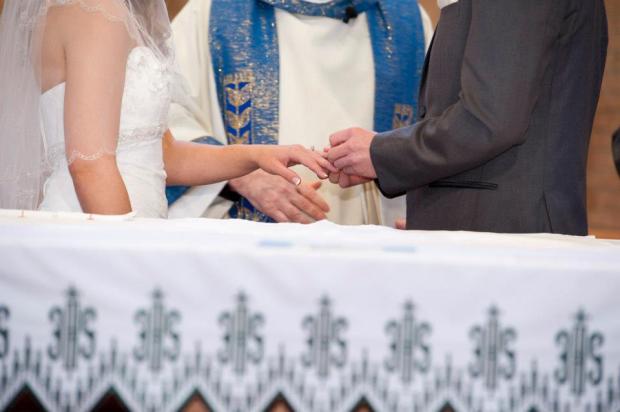
Handling the adjustments to newlywed life together.

There is a lot to love about being married. So many more things, I believe, than any husband or wife could even fully recognize—let alone count. It’s just a lovely way to live your life.

But marriage isn’t about easy or simple or hassle-free. It’s about commitment, partnership, and permanence. None of those are easy things to offer, and when it’s unfamiliar, it can be tough to wrangle a new way of life.

Erik and I were the first in our close circles of friends to marry, and among the firsts in our immediate families—so there have been a lot of adjustments requiring inexpert maneuvering and limited advice from peers. Based on that experience, the list below is a slightly unconventional look at the hard parts of being a newlywed.

If you’re a fiancée, fiancé, or newlywed, I hope you consider giving this a read. And if you love a newlywed (or a pair of them), it might give you some insight into the not-so-warm-or-fuzzy stuff, too.

  • Traditions.

Every holiday you’ve ever experienced has had a familiar cadence. But a new marriage means new traditions. And, unfortunately, starting new ones means breaking old ones.

That means Thanksgiving, Easter, and every event in between is going to be different. Own that. Longstanding traditions from two distinct histories are just hard to navigate. For some, that means one side of the family will opt for something new, and you can’t adhere because of conflicts with the other side. For others, it means you’ll have to be brave, offer to host, and start some traditions of your own. For everyone, it means respecting your in-laws’ and your spouse’s feelings, balancing that with your own family, and being true to yourself, too.

Amidst the madness, remember that your collective family is different post-wedding. Two have become one. Do everyone justice by being as accommodating as possible, but also by acknowledging the necessary change in your new beginning.

  • Distance.

This one’s a doozy. Sure, getting married means moving out and, possibly, moving away. But it’s almost worse to feel the emotional distance that a new life inevitably creates.

You cannot see your friends, your siblings, or your parents as much as you once did—no matter how much you tell yourself otherwise. Your spouse is your sole partner and, naturally, they deserve the majority of your time. That’s the way it should be.

Nevertheless, it’s never right to break away from the family that’s raised you and known you from birth. Work hard to help your relationships grow and evolve, and prevent them from suffering. Involve your spouse when you can. Give your friends and family the love they deserve. It takes practice, but find new ways to stay in touch—and never hesitate to reach out. It’s different, but it doesn’t have to be bad. Remember that, and commit to it.

  • Finances.

I am a firm believer in fully sharing finances with your spouse. It’s practical, it’s an act of trust, and it’s another way to commit yourself to your marriage. But that doesn’t mean it isn’t stressful.

Money is among the most frequent drivers of divorce. But if you ask me, it’s rarely about the money. It’s about learning to share, be selfless, and stay sensible.

Do yourself a favor and tackle this from the beginning. Practice full disclosure. Agree to a large purchase threshold (at what dollar amount should any purchase be discussed before it’s made?) and stick to it. At the heart of it all, recognize that when you spend money as a married woman or man, you’re not just spending your own—you’re spending your spouse’s.

  • Pride.

Arrogance, stubbornness, and self-absorption—the three themes of pride—are a problem in any relationship. But, while a good marriage naturally propagates the positives of your partnership, the close proximity of wedded life simply makes it easier to see the negatives.

Everything in life is relevant to you as a couple. It’s not about you, them, who’s better, or who’s right. You spend your time together, endure every discomfort, and share everything. It is essential for you to let go of shame, because shame makes us closed off, pig-headed, and selfish—making pride a defense mechanism for it. Your marriage is a safe space, so allow yourself and your spouse to let go and level with one another in all things.

Additionally, most arguments are worsened (if not caused) by pride. If you know your spouse deeply and you’re properly prepared for marriage, the disagreements themselves aren’t what break your heart—it’s the way you fight over them. Give your spouse the respect they deserve. Make an effort to think before you speak, give 100% (because marriage is 100/100, not 50/50), understand there is no winning, and forgive readily.

  • Compromise.

Everyone says compromise is key, but it’s easy to forget how hard compromise can be until you’re in the middle of a disagreement. Sure, you both get some of what you want. But no one gets everything they want. After a few decades of individual living, that can be hard to swallow.

Your routine, pastimes, home, diet, and household duties won’t be everything you want them to be. It goes without saying that you must accept that. But I’d suggest you start liking it that way, too.

Logistically, choose to live your life as if your spouse needs you to do everything you physically can for them. They should do the same. That’s marriage. There’s no “meet in the middle” or “come halfway”—husband and wife must each give their all. Accept that, and you’ll be happier with what you give and receive. And for the non-logistics? Try new things. Be selfless. When you do it your spouse’s way, learn something about them. Take an interest and have conversations you haven’t had before. If you and your spouse do this for each other, neither of you will lose. You’ll each maintain your own interests, share them with the other, and learn to love some new pastimes. It’s a great way to continuously grow as individuals and as a couple, and the openness to new things will help you avoid a rut.

My young marriage isn’t perfect, and Erik and I still struggle with all of that tough stuff. But I am striving to be a better wife, and he’s striving to be a better husband. And we have our whole lives to get there.

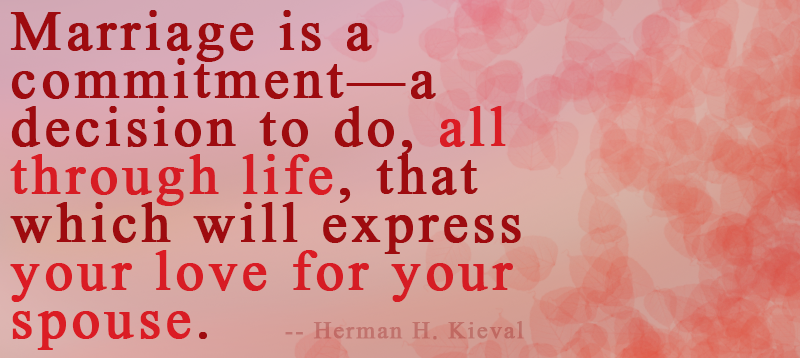
Marriage Commitment

Does NFP Work? (Or, How Am I Not Pregnant?)

In my first post about natural family planning (NFP), I mentioned that almost everyone asks “Does it really work?” when I tell people that my husband and I practice it. Given that it’s been almost a year and a half since the wedding and I’m definitely not pregnant, it seems like a funny question. It sort of answers itself, doesn’t it? But regardless, it’s a valid question, so I’d like to address it.

To level-set, I’m no expert on this. I’m a user of the method and I’m an advocate for it, but I haven’t been trained to teach it to others and I can’t speak beyond the statistics and my own experience. I will say that, for our first year, we worked closely with a professional, certified practitioner to learn the method thoroughly and ensure we were doing it right.

I’d also like to point out that this post briefly mentions some signs of female fertility, so if you’re not interested in reading about that, you might want to stop now. Just a friendly heads up.

However, if you’re interested in learning more or trying NFP for yourself, I’d be more than happy to give you our teacher’s contact information. You can also check out this website to find a list of practitioners in your area, if you’re not around Chicago.

Alright, now, let’s get to the meaty stuff.

There are a number of methods that fall under the NFP umbrella. All of them track a woman’s hormonal cues to identify fertile and infertile days. Those cues include basal body temperature, cervical mucus, cervical position, and other physical readings.

Erik and I use the Creighton model. We chose it for a few reasons:

  • It doesn’t call for a basal body temperature (BBT) reading. BBT must be taken every day if it’s used to track fertility. It’s usually taken in the morning and requires a very consistent sleeping schedule, which I don’t have—so a BBT-dependent method wasn’t really going to work for us.
  • I’d been minimally exposed to it before. A friend in college experienced some feminine health issues, and her doctor helped her use this method to help track her physical cues, identify problems, and improve her treatment. Sounded like a great thing to me.
  • It’s incredibly easy. You just need to track one cue throughout the day, each time you go to the bathroom. Once you get the hang of it, it adds maybe five minutes—in total—from morning to night. No trouble at all.
  • It encourages involvement of both husband and wife, so both can understand their fertility and grow closer as a couple. It also encourages positive interactions—spiritual, physical, intellectual, communicative, and emotional—at every stage. It’s a great resource for working to keep your bond strong in unique ways every single day.
  •  It works. It’s been thoroughly studied and tracked, and it’s proven effective.

One of the great things about NFP is that it’s incredibly inexpensive. After your first year—when training is a good idea, since any kind of family planning only works if you do it right (including hormonal birth control)—all you require is the supplies. In our case, those consist of a paper chart and some stickers. Super easy.

NFP tracks your fertility by helping you understand what cues to look for. Your body knows when it’ll be ready to conceive during each cycle and prepares itself accordingly. For most women, the changes are noticeable and very easy to monitor.

When used perfectly (not a difficult feat, as I mentioned above), studies have shown that NFP is as effective as hormonal birth control, making it even more effective than physical contraceptives. But you don’t need to add artificial hormones to your body, you don’t need to suppress your natural cycles, and you don’t need a barrier between you and your husband.

NFP is not the rhythm method. Just as every other human science has advanced in the last few decades, natural family planning has, too. This isn’t about guessing when you’ll ovulate by counting days and averaging cycles among all women. It’s about following your individual fertility and wellness—as unique to you as your thumbprint. That’s why it’s so effective.

In addition to its efficacy at delaying pregnancy, NFP can also be used to help you conceive. Those same hormonal cues tell you when you’re at your peak during each cycle—so, when you and your husband are ready, you know the best time to try. That’s key to successful conception, because your egg can only be fertilized during a narrow 12-24 hour window of each cycle. That’s it. Knowing where that window is can help greatly increase your chances of conceiving early on.

So, does it work? The answer is yes. It works incredibly well for your family, your fertility, and your health. And it’s worth a try.

Creighton Photo

Individual Roles, Mutual Subjection, and Equal Respect in Marriage

My husband and I are two exceptionally different people. I love chocolate; he likes vanilla. I could spend entire days reading; he gets bored after a few pages. He enjoys hunting (for food, not sport); I can barely carve raw meat without cringing. He finds peace in woodworking; I relax while I write.

Every relationship is like this in one way or another. Each of us is a one-of-a-kind blend of nature, nurture, opinions, and habits. For that reason, no two people are the same—and wedding rings don’t turn husband and wife into a single-minded, tunnel-visioned creature. Two become one, but that happens because they complete, support, and accept each other without question.

Given our differences, practically speaking, one component of a healthy marriage is settling into a mutually satisfying set of responsibilities, checks, and balances. In our case, that means Erik pays bills while I go grocery shopping; he shovels the driveway while I do the laundry; he cleans out clogged drains while I toss the expired stuff out of the fridge. We have a pretty traditional approach to household tasks, but not every marriage does. Some men love cooking, like cleaning, and know nothing about home repair. Some women love yardwork, enjoy changing their oil, and have no clue how to patch a pair of jeans. There’s nothing wrong with that. Any combination of shared tasks will do.

The point is finding a balance in which both husband and wife contribute to home and happiness. No one likes chores. But when spouses compromise based on what’s more agreeable for each, they can define their roles easily. Of course, we all trade tasks here and there, when the mood strikes. Again, the point is a shared balance—not formality or normality. You fulfill your responsibilities not because you like it, but because it must be done and you love your spouse enough to share the load. This applies to small stuff like cleaning and setting up dentist appointments, and to larger things like career paths and home defense. That’s family. That’s the partnership that a strong marriage requires.

So, given that well-rounded approach to sharing individual but mutually necessary marital responsibilities, what does the following passage tell us about the roles of husbands and wives?

Wives, submit yourselves to your own husbands as you do to the Lord. For the husband is the head of the wife as Christ is the head of the church, his body, of which he is the Savior. Now as the church submits to Christ, so also wives should submit to their husbands in everything. Ephesians 5:22-24

Let me begin by saying it does not tell us to be slaves. We are not the unthinking, helpless creatures that pop culture has misinterpreted and twisted this verse into implying. We are capable, beautiful women—wives, mothers, sisters, daughters—and we are strong, so don’t get that wrong.

I recently read a wonderful article that sums up what this passage means. You can read it here. I believe it’s clearly and beautifully voiced the truth behind these verses, so I’d like to share it with you. The following analysis largely mirrors and learns from that article.

Ephesians 5 tells us to accept our husband’s role in our marriage. The Greek word for ‘head’ in this reading is kephale. It doesn’t, literally or figuratively, mean ‘boss’ or ‘king.’ It literally means that thing that sits on your shoulders. Figuratively, the Greek word kephale means ‘source or beginning or completion,’ or ‘one who brings fullness.’ From that perspective, if a wife cannot accept her husband as the one who completes her or brings fullness to her life, she isn’t looking at marriage the right way.

The family unit is where the Church begins, so each family is called to be a mirror of the perfect love exemplified by Christ and the Church, his bridegroom. Husbands fill the role of “head” for a number of reasons. His job is to be a deliberate, logical, and emotive leader. He is a provider and a caregiver, and he takes responsibility for his family’s health, happiness, and safety.

You might still argue that that’s an outdated, hyper-traditionalist way to look at the role of the husband. But being a provider doesn’t mean his sole task is to bring home a paycheck while his wife keeps house. It means doing what he can to make his wife and his children comfortable and happy, and accepting his responsibility for their success. That role can take many forms, and Ephesians calls all wives to be humble and loving enough to accept that role for their husbands.

The rest of this letter’s passage on marriage adds more color to the role of the husband:

Husbands, love your wives, just as Christ loved the church and gave himself up for her. in order to make her holy by cleansing her with the water of the word, so as to present the church to himself in splendor, without a spot or wrinkle or anything of the kind—yes, so that she may be holy and without blemish. In the same way, husbands should love their wives as they do their own bodies. He who loves his own body loves himself. For no one ever hates his own body, but he nourishes it tenderly and cares for it, just as Christ does for the church, because we are members of his body. ‘For this reason a man will leave his father and mother and be joined to his wife, and the two will become one flesh.’ Ephesians 5:25-31

The added emphases are mine; they’re meant to call out the depth of humility husbands are called to offer for their wives. The love Paul asks from them here is not erotic or domineering—it is profound, selfless, and sweet. Nowhere in this passage does Paul tell husbands to dominate their wives, give orders, or put themselves first. Instead, Paul is calling for men to offer themselves as servants to their wives: love her, cleanse her, make her holy. Put her first so that she may be without blemish; nourish and care for her tenderly so that you may live your fullest life.

Given the practices of Paul’s time, this message is a radically humbling one for men in the Church. He calls each husband not to be a property owner or a monarch, but a loving, kind, and humble husband whose life’s work is to meet the needs of and support his wife. I don’t see anything misogynistic in that.

Women are blessed with the sublime and completely unique gift of femininity. Naturally, her heart is uniquely open to nurturing love, and that’s true even if she struggles with fertility. In that way, a woman’s role is biologically and spiritually unique to her: she is ordained to be a sister to her family, a wife to her husband, a daughter of God, and a mother to all children. There is no greater blessing than the outpouring and influx of love in a mother’s heart.

Husbands, though biologically separate from the birth of children, are ordained as fathers, sons, brothers, and husbands. Their role, though different, is no less and no more important.

To call men and women the same is an insult to both their geniuses. They look, love, serve, and behave differently. They were created differently, so that each might have their own characteristics, strengths, and weaknesses. They were made to balance one another, to complement each other’s unique needs, and to serve one another.

So masculine and feminine roles in marriage aren’t defined by 1950s standards of social acceptability. It’s not about who cooks, who works, who cleans, and who decides. It is about the two of them becoming one cohesive, loving body—one union to live and share life as beautifully and fully as they can. The day-to-day breakdown of responsibilities isn’t what’s important; the love, selflessness, and balance of their relationship are. And where those priorities are in place, mutual respect will inherently dwell.

Marriage is not 50/50 or 70/30—it is 100/100. It is an equal partnership in which both spouses give everything they’ve got. What they each have is unique to them—that’s why it works. And that’s why we love one another.


Why I Don’t Use Hormonal Birth Control

When I tell people I don’t believe in using artificial birth control, they often think I’m one of three things: a hippie, a nut, or an overly religious, old-fashioned conservative.

I can tell you I’m a religious, old-fashioned, and fairly conservative young woman. But I’m not crazy and I’m not into conspiracy theories.

My husband and I chose to save sex for our wedding night, largely because it’s what we believed was morally, physically, and spiritually right. But we were also scared. Scared of getting caught, scared of getting pregnant, scared of regretting it later. No matter the reason, it was the best decision we could’ve made.

For that reason, I didn’t need to think about birth control until a few years ago. I had irregular cycles and acne as a teenager, but I never wanted to ask for birth control pills to address those things. I didn’t want to give my family the wrong idea, and I didn’t, frankly, want to tempt myself.

As Erik and I matured and began planning our marriage, we did a little more digging into church teachings about family planning. We knew the church taught against artificial birth control, but we didn’t know why. Was it just outdated, like everyone said? Was there an alternative that wasn’t just plain risky? Were we prepared to have a busload of kids?

So we looked into it. When we read that the pill—which seemed like the easiest option—could serve as an abortifacient form of birth control, we decided to do even more research.

So I want to talk about the pill. I don’t think women know enough about it, simply because we’re never taught enough about the way it works. So I hope this is helpful.

In sex ed, everyone tells you the pill works by tricking your body into thinking it’s already pregnant. In fact, people still tell me that if I ask them how it works today. The thing is, it’s not really that simple. It adds hormones to your body in a similar way that a pregnancy would, sure. But that’s not all it does.

Hormonal birth control—i.e., the pill, as well as most patches, IUDs, injections, and other chemical forms—works in four ways:

  • Suppressing ovulation to prevent your ovaries from releasing an egg during each cycle
  • Altering your cervical mucus so it’s more difficult for sperm to navigate
  • Disrupting the way the cilia in your fallopian tubes move to reduce the chances of a fertilized egg reaching the uterus for implantation
  • Inhibiting the growth of your uterine lining (the endometrium) so any fertilized egg could not attach properly
  • (In some cases, the “mini-Pill” (a progesterin-only option) may not prevent ovulation or conception (those first two tactics) at all.)

Two of those effects are designed to prevent conception. But the last two prevent implantation—meaning your body hasn’t been tricked, knows you’re not pregnant, and has ovulated as it naturally would. Your cervical mucus wasn’t thick enough to keep sperm from traveling through you. So an egg is fertilized, and pregnancy has begun.

The pill doesn’t give up, though. The third effect prevents the body from moving your fertilized egg to the uterus, where implantation would take place and the embryo would receive the nutrients necessary for development. The fourth effect changes the environment of your uterus and prevents that viable zygote from taking its place in your womb and growing. That zygote—though very tiny—has its own DNA. It is individual of the woman’s body, in that her DNA and her partner’s—two human parents—have joined to create a third entity. Science has proven that conception is the moment a new individual (and, therefore, a pregnancy) begins—not implantation. The DNA is human. Given the simple resources a pregnant mother provides (a warm, safe place, nutrition, and oxygen), that individual will grow into an infant who, in just a few months, can be held and tickled and nursed in its mother’s arms.

Occurring about a week later, implantation is simply the end of the embryo’s journey down the fallopian tubes. It settles into the uterus by attaching to the endometrium, which provides the nutrients it needs to grow and develop. That little individual—with new DNA and a separate makeup from its mother—has already existed for several days. When the lining of the uterus has been altered by the pill, the implantation factors of the lining—key chemicals, as well as special molecules known as integrins—are damaged and unable to perform their job. So imagine that zygote is a plane led by a pilot, and the uterine lining is the airport. If the crew at the airport can’t communicate with the pilot flying the plane, the plane can’t find a safe place to land. And if the plane can’t land, the pilot won’t survive long.

The “morning after pill” works this way, too. It’s just a high dose of the hormones that will delay ovulation and/or alter the endometrium, with the hope that ovulation will not occur or, if it already has, that the uterine lining will be compromised before the embryo reaches it. The plain old pill just does it a little slower.

So, anything that works to prevent conception can be called contraceptive. But anything that fails to prevent contraception can’t share the same term. Conception has already happened. At that point, your pill becomes abortifacient. That is the scientific word for anything that stops a pregnancy after conception has already occurred.

That said, even if the birth control industry came out with a pill that didn’t have an abortifacient effect, I still wouldn’t take it. Aside from the health risks (which I’ll also address in another post), I don’t think it empowers women. In fact, it literally—by which I mean physiologically—suppresses the women who take it.

What message are we sending our future daughters when we say that taking the pill—effectively turning off a natural function of our bodies, and altering the way our biology works—is the only way to gain control over our love lives, our families, and our sex lives? That’s the opposite of support. It conceals a woman’s natural, complex biology so she can become an object of pleasure. It’s repression. And I don’t buy it.

Our bodies do amazing things each month. That’s part of our feminine identity—it’s the magic only we can make happen. And it’s not just about the fact that we can carry children. Sadly, some of us can’t. In every case, understanding the way our natural cycles affect our day-to-day wellbeing gives us greater insight into our health and physical selves. It’s about knowing yourself, truly. It’s about taking ownership of the complex, profound woman you were literally made to be. It shouldn’t be about stamping out your nature because you were never taught how to handle it on your own, or that it was worth protecting. We’re capable of so much more than that. All of us.

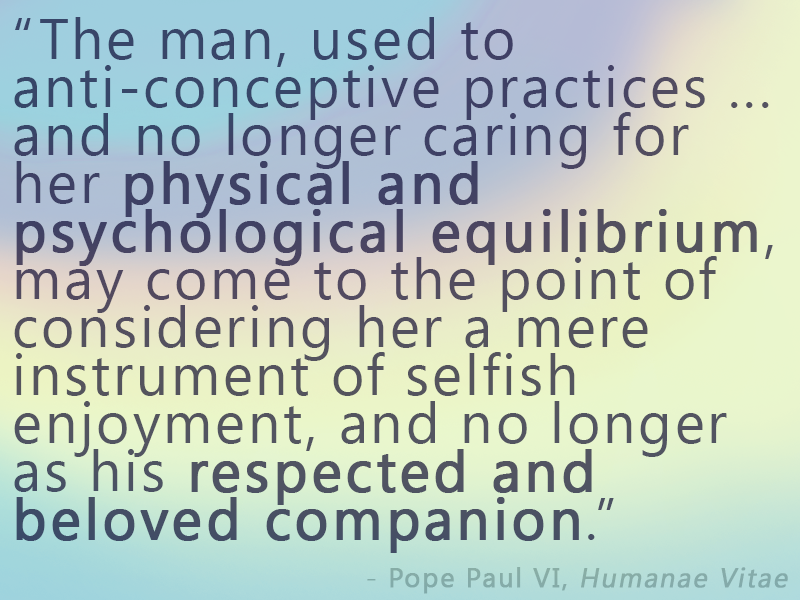
Respected and Beloved

My Husband and I Practice NFP. Now You Know.

Pop quiz: What’s number one on the list of FAQs encountered by virtually every newlywed couple ever?

“So, are you planning on having kids?”

Bingo. All of us hear it. Even though it can get irksome from time to time, I don’t think there’s anything wrong with our families asking about it. For some of them, it’s something akin to “Are we there yet?” They’re excited to hear the pitter-patter of little feet and see a little bundle at the next family gathering. Who isn’t?

Plus, it gives me hope. The fact that building a family of happy, well-loved children is still foundational to marriage—and the logical next step—is encouraging. Because that means family still matters.

Like anyone, Erik and I do our best to answer this question honestly, discreetly, and without awkwardness. Our children, after all, will be neighbors, friends, cousins, nieces, nephews, and grandchildren to these people. It takes a village.

But there’s something tricky about our answer that, if I’m honest, I could do a better job of addressing. And when I say “tricky,” I don’t mean “crazy” or “questionable.” I mean “misunderstood” and, often, “looked down upon.”

Natural family planning is hard for me to talk about. That’s partly because it’s hard to make people understand. Frankly, though, it’s also because I always expect to be judged. And the more I think about that, the more it bothers me—because, in my heart of hearts, I know there’s nothing crazy or questionable about it, and I know the people asking won’t react that way.

Typically, I’ll only barely discuss it with immediate family and virtually no one else. The conversation usually goes something like this:

Relative: “So, are you and Erik planning on having kids anytime soon?”

Me: “We definitely plan to have a family, but not right away. For now, we’re happy just enjoying each other as husband and wife.”

Erik and I are not shy about practicing our faith, nor are we shy about our efforts to adhere to the Church’s teachings. Maybe for that reason, I often get a really specific follow-up right about now. It’s typically accompanied by a skeptical look and mild concern.

Relative: “Well, are you doing anything to prevent it?”

And there’s the kicker. This is when I have to decide how deep I’m willing to get into the topic in that moment. Ultimately, I take one of two (very weak) approaches: vagueness or avoidance.

Me: “Yes, we’re being purposeful about it”  or “Yes, but nothing artificial.”

That’s the phrase I always use: “Nothing artificial.” And, usually, the relative will nod quietly and change the subject, or ask me a follow-up or two. (Examples: Does it work? Isn’t that rhythm method way out of style? Doesn’t that mean you can’t have sex?)

I’m a little ashamed to tell you that the conversation has never gotten much farther than that, unless I’m discussing it with someone I know is also practicing NFP, or at least in agreement with it. That’s because I’m afraid of judgment. And that shame is on me—not on the person who’s asking.

I should be excited to tell them how well it’s working for Erik and me, how close it keeps us, and how effectively it has helped us keep our lines of communication open. I should tell them how much better I understand my femininity and my fertility because of it. I should readily bring up all of the statistics I know by heart, all of the evidence, and the science behind the methodology we use. And, above all, I shouldn’t hesitate to bring my catechism into the conversation and talk about the most important question of all: why we do it. But I’m not that brave, and I am nervous.

For me, it’s pretty easy to be married. It’s easy to practice what I believe in private, with the support and close partnership of my husband. But sometimes it’s hard to bring that into the full light of day. And it’s hard not to worry about what other people will think.

So I’ll consider this my “debut” as an NFP user and advocate—even if it’s only in my circle of friends and family. I’ll keep talking about here, and I’ll try to be better in one-on-one conversations, too. Ask me about it. And don’t let me avoid giving you a genuine answer.

nfp-pro family

Giving Faith a Boost in Just 88 Hours per Year

As a kid, I wasn’t very good about going to Mass. I complained, hated waking up “early” on Sunday mornings, and didn’t stay focused during the liturgy. I think a lot of kids are like that, unfortunately. It can be hard to get them involved.

What’s harder, though, is sticking with the routine when we’re older and our parents aren’t there to hold us accountable. Especially in young adulthood, it’s easy to neglect that weekly obligation. You’re tired. You’re working (or playing) hard. You’ve got a project to finish. Your friends aren’t going.

Fortunately, we Catholics are blessed with a special kind of guilt complex. That’s because the Church is always there to hold us accountable, even when our neighbors aren’t. She has our basic obligations cleanly and simply outlined for us: go to Mass on Sundays and holy days; confess your sins at least once yearly; receive the Eucharist at least once yearly; observe a handful of fasting and abstinence days throughout the year; give what you can.

Those obligations aren’t difficult to meet. At their hearts, all of them are about receiving much more than they’re about giving. And when you consider how much time it takes to fulfill them, it’s difficult to justify neglecting them.

Let’s assume each Mass takes an average of 1.5 hours to attend. In 2014, there will be 52 Sundays and 6 holy days of obligation (in the United States). 58 multiplied by 1.5 equals 87.

The Eucharist is part of the Mass, so no need to add extra time there. Fasting and abstinence aren’t about giving up time; they’re small sacrifices to make you think about the gifts God has given you. And giving what you can doesn’t have to mean more time—it means a few coins or bills out of your pocket, a few extra groceries in your cart.

So all that’s left is to add another hour for that annual confession. It probably won’t take nearly that long, but we’ll account for travel and wait times, just in case.

That’s 88 hours of your whole year devoted to God outside of your home—about the time you’d spend working and commuting for just two weeks. That’s it.

You have 8,760 hours to spend in 2014. Is it impossible to commit barely 1% of that time to thanksgiving, communion, and prayer? Does your faith make up less than 1% of your identity? After all, what we do reveals more about us than what we say.

The average American spends about 1,643 hours each year watching TV. A lot of us spend at least that much time on the internet, too. We spend at least 2,000 hours sleeping, and at least 2,000 hours working, too, if we have a full time job. Those aren’t necessarily fun, but we get them done, right?

We’re told to spend about three hours a week exercising our bodies. With work and intellectual activities like reading, we spend another 40+ hours exercising our minds. In the interest of improving ourselves holistically, isn’t exercising our souls worth two hours of our time each week?

For my part, I’m good about meeting those obligations, but I’m not good about committing more than that 1% of my life to my Church. In high school and college, I often went to daily Mass (at least partly thanks to Erik, who is fervent and passionate about his faith in a way I truly admire). I also participated in a handful of faith-based activities, which helped me stay thoughtful and devoted throughout the week.

Today, with a full-time job and a long commute, it’s hard for me to make myself do much more. But there’s a daily Mass offered walking distance from my building downtown. I could go several times a week if I wanted to; I just don’t. But I should, and I’m trying. I’m also hoping this blog will keep more of my mind and my time on God.

It’s also easy to supplement that 1% with learning: consume a few verses of the Bible each day; read the Catechism; follow Catholic blogs; have a conversation with your priest, your family, or your friends. Spend a little time talking to someone about your beliefs. Ask a few more questions (even if Google’s the one finding the answers for you, there are thousands of good resources to be discovered). Follow the Pope on Twitter. Read an article on EWTN. And, of course, there’s prayer.

None of us is perfect. But giving 1% of your time to improve your faith life, join your community, and thank your Father doesn’t require perfection. It takes just an hour or two of your week, an ounce of work, and a little bit of purpose.

1PercentGraphic